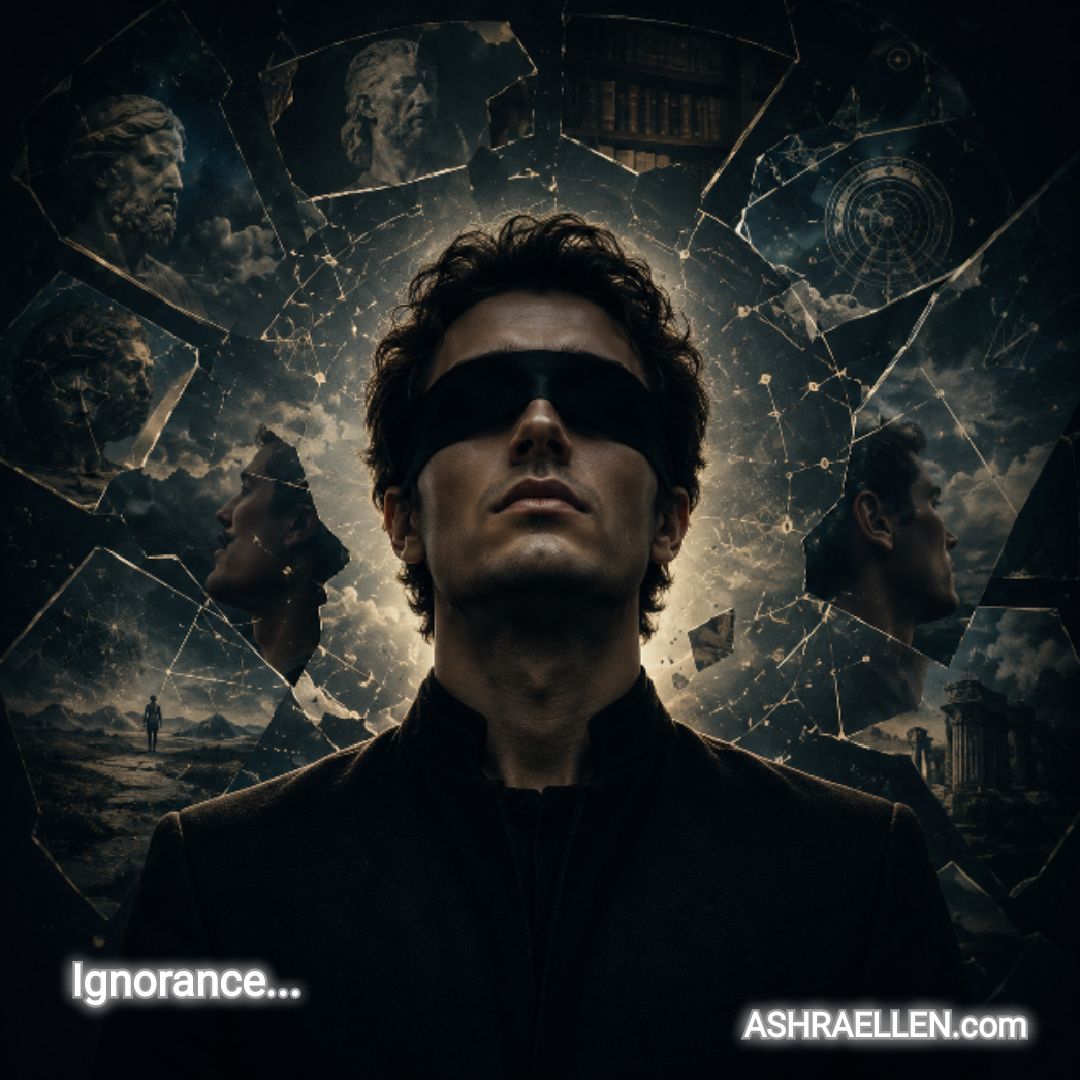
The true enemy of a person is not his ignorance.
Ignorance in itself is not yet a disaster.
It is honest.
It simply does not know.
And the one who does not know and understands that he does not know can still ask.
Can stop.
Can listen.
Can one day see that the world was wider than yesterday’s certainty.
Something else is far more dangerous.
More dangerous is the person who does not know, but is already certain.
Certain of his conclusions.
Of his offenses.
Of his rightness.
Of his picture of the world, assembled from rumors, fear, convenient explanations and a couple of old wounds that long ago received official certificates of truth.
Such a person no longer seeks.
He confirms.
He does not listen.
He checks whether what he hears matches the sentence already passed inside him.
He does not look.
He recognizes outlines prepared in advance.
He does not meet reality.
He hangs a label on it and walks on, satisfied with his own definiteness.
Ignorance can be enlightened.
Self-satisfied certainty is difficult.
Because it protects not knowledge.
It protects the image of a person who is afraid to become a beginner.
Afraid to say:
"I do not understand."
"I may have been wrong."
"I was looking too narrowly."
"I mistook my reaction for a fact."
And here real darkness begins.
Not where a person does not know something.
But where he no longer allows the possibility of knowing otherwise.
The true enemy of a person is not his ignorance.
It is the pride that built a fence around ignorance and called it a worldview.
Sometimes the first step toward light does not look like a great revelation.
It looks like a simple, almost childlike admission:
"I do not know."
And if it is said honestly, without posture and without defense, there is already a door in that admission.
A small one.
A quiet one.
But a real one...