A literary and research cycle · seven books

SEVEN

Seven human vulnerabilities. Seven independent literary worlds. One attempt to understand how ordinary desires, fears and needs gradually begin to govern a person's choices.

Not a verdict on human vices, but a journey into the moment when a person fails to notice that their strength has become their vulnerability.

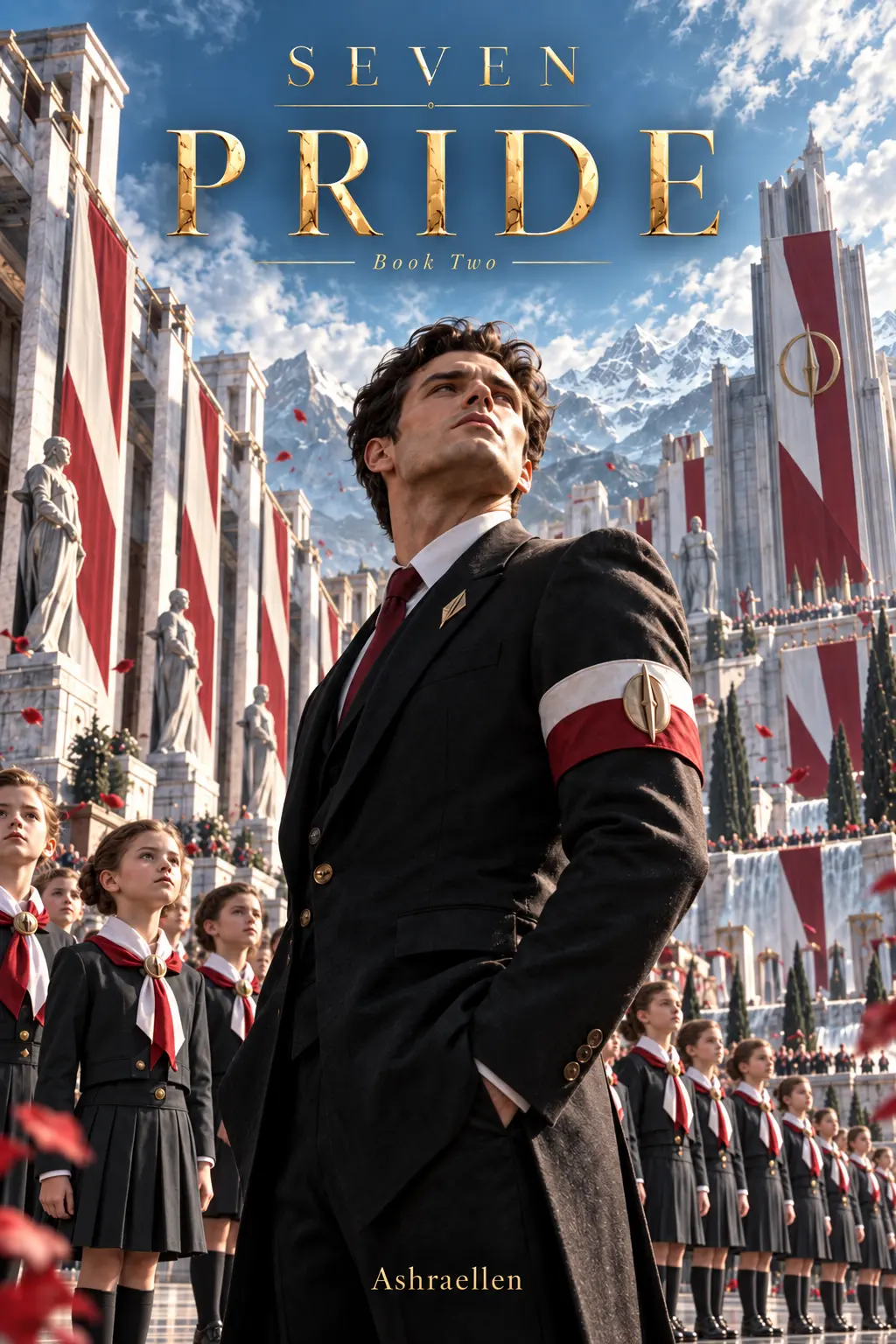
SEVEN literary cycle cover: seven reflective monoliths and a human figure

What is SEVEN?

Literature and the research question

SEVEN takes as its point of departure the historically familiar pattern of seven human vulnerabilities. It does not, however, sort people neatly into the “greedy”, the “proud” or the “lustful”. What matters is the moment of transition: when an understandable ambition grows excessive, becomes entangled with other motives, starts justifying actions and gradually changes the person acting.

The cycle is not seven variations on the same plot. Criminal intrigue, social order and intimate relationships confront people with different kinds of choices. Each story's genre grows out of the aspect of vulnerability it allows us to see.

Unlike a diagram or a brief psychological example, a novel unfolds across time: a promise, the first compromise, consequences, getting used to them, and the next fork in the road. It creates space to follow a character's inner logic without assigning them a diagnosis or moral verdict in advance.
Books in the cycle

The first three books
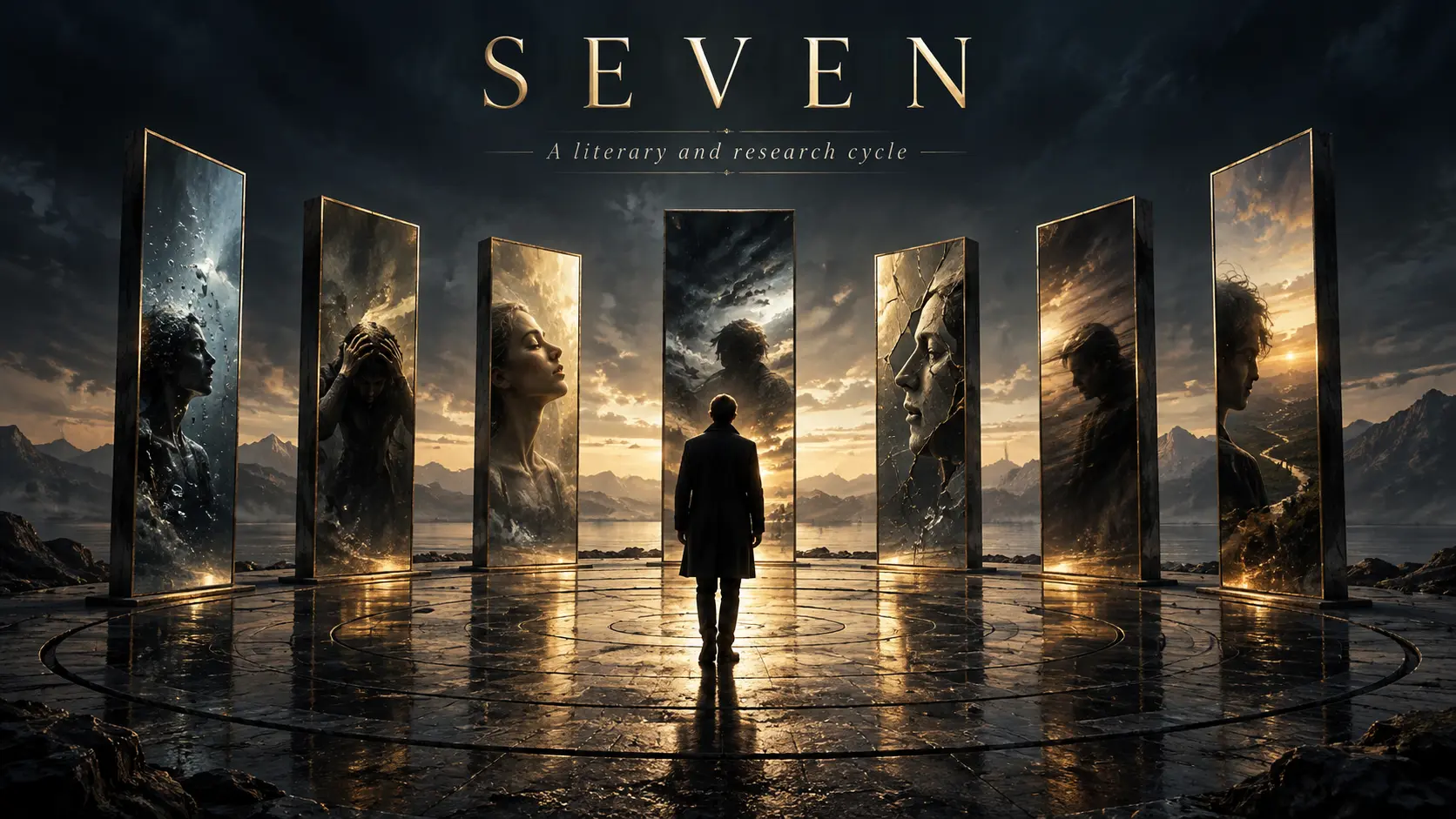
Cover of GREED, the first book in SEVEN

Book I · GREED

Greed

A psychological crime novel about the way the desire for more, fear of losing what one has, hope and self-justification gradually shift the limits of what seems acceptable. One person searches for a vulnerability; another searches for an opportunity. What happens when their searches meet?

Novel in progress · Russian manuscript

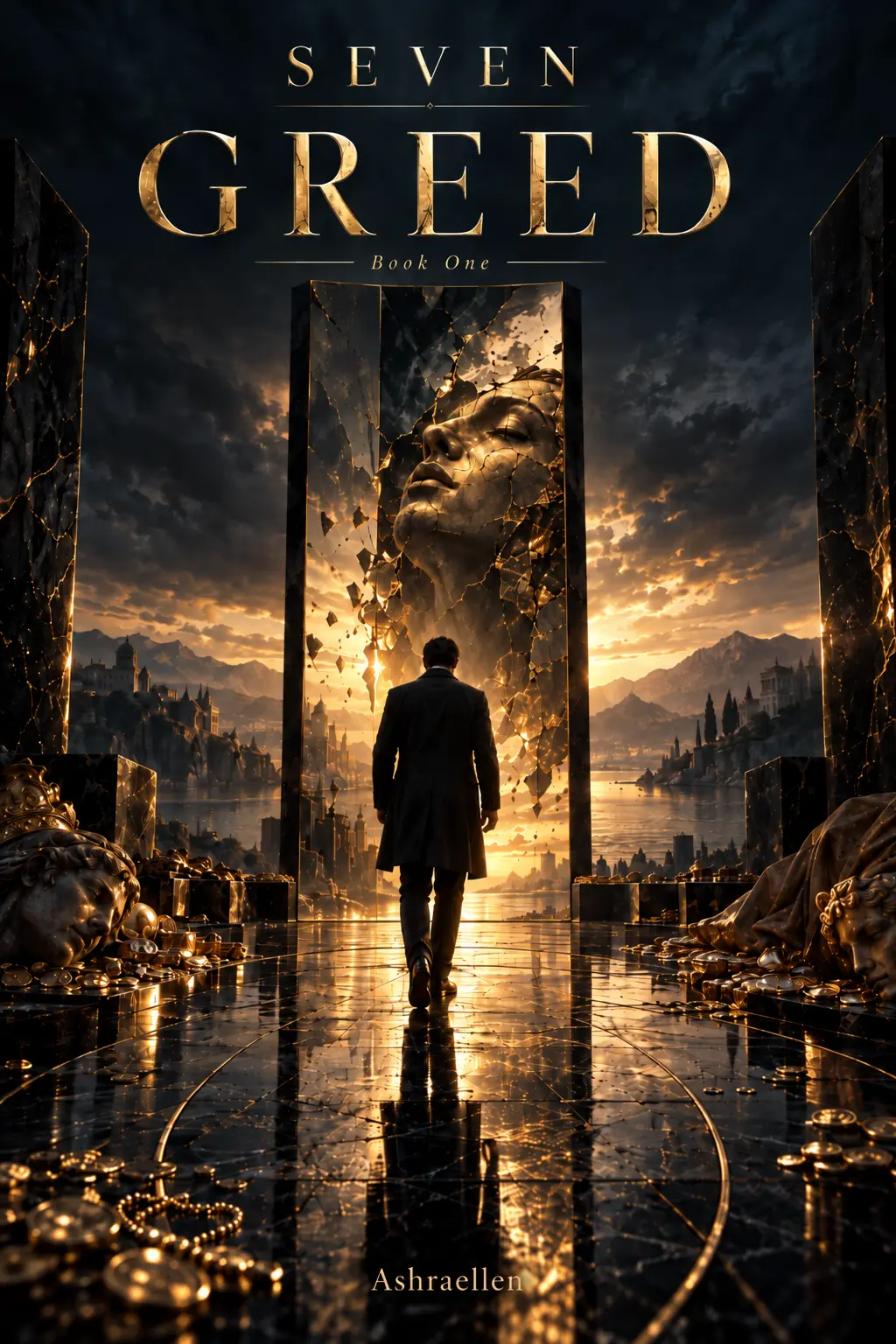
PRIDE cover: a man in a dark suit wearing a white-and-red armband, with schoolchildren in two-coloured neckerchiefs on a ceremonial square

Book II · PRIDE

Pride

A country with a great history learns to take pride in itself again. Decades later, its streets are spotless and its institutions function, but belonging has become a privilege. A person may be needed by a country for an entire lifetime and still never be accepted as one of its own. A dystopia about pride turning into exceptionalism and administrative inequality.

Literary concept developed

Book III · LUST

Lust

Desire promises intimacy, pleasure and freedom. But where is the line beyond which attraction becomes the urge to possess another person? The third story will explore this difficult territory of human relationships.

At the concept stage

Seven vulnerabilities — seven ways of losing a sense of measure

A literary map, not a ready-made classification of people

The traditional names of the seven “deadly sins” serve as signposts here, not finished portraits of individuals. Behind them lie familiar parts of daily life: acquiring and holding on, dignity and recognition, attraction, comparison, defending one's boundaries, satisfaction and rest.

What follows offers seven ways of looking at ordinary human impulses. The first three are already taking shape as books; the remaining four are waiting for their stories.

Greed / GREED · Book I

The need for security is not dangerous simply because someone wants more. The danger emerges when no outcome ever seems enough. How does the prospect of one more gain change the way we assess risk — and our ability to walk away?

Pride / PRIDE · Book II

Pride in a shared past can unite a community. What happens when that unity begins to demand a boundary between the “real insiders” and everybody else — and can no longer admit its own mistakes?

Lust / LUST · Book III

Desire does not, in itself, mean domination. But can longing remain free when another person becomes a means of confirming one's own attractiveness, power or exceptional status?

Envy / ENVY

Comparison can illuminate somebody else's path and our own possibilities. But what happens when another person's happiness feels like a personal defeat, and justice begins to mean taking away their success?

Wrath / WRATH

Anger can be a response to violence or a violated boundary. When does self-defence become a desire to punish at any cost? How do the memory of an injury, certainty of being right and the support of others alter our decisions?

Gluttony / GLUTTONY

Human beings need pleasure, satisfaction and comfort. Yet satisfying an appetite does not always bring a sense of enough. Could a story about excess reach beyond food — towards an inability to stop seeking another purchase, sensation or experience?

Sloth, acedia / SLOTH

Rest, pauses and refusing a pointless race are human necessities. But how does choosing to stop differ from gradually withdrawing from one's own life? Here it matters especially not to confuse a moral label with exhaustion, illness or circumstance.

About the cycle's structure: GREED, PRIDE and LUST are designated as the first three books. ENVY, WRATH, GLUTTONY and SLOTH make up the circle of later themes; their fictional worlds and eventual order have yet to be imagined.

Who is SEVEN written for?

The story matters more than agreeing with any theory

SEVEN is written first and foremost for readers of fiction. You do not need to study research protocols, know the history of religious morality or share the author's hypotheses to enter this cycle. Each book must stand on its own as a literary work, with its own characters, world, tension and human decisions.

The cycle may appeal to readers of psychological fiction and dystopia, interested in unreliable self-justifications, slowly changing characters, moral ambiguity and stories in which danger begins not with a monster but with the familiar thought: “I was only trying to do the right thing.”

Readers will encounter people, not illustrations of definitions. Their decisions may invite sympathy, disagreement and uncomfortable recognition at once. We can understand one character without excusing them; condemn another's actions without declaring their entire being bad. Room for precisely this disagreement is an essential part of the literary vision.

For editors, publishers and research partners

Literary and research work develop in parallel

The literary strand offers scope for editorial dialogue, manuscript work, translation, publishing partnerships, readers' discussions and presentations of the cycle. The range of genres within SEVEN is deliberate: a shared subject does not require a uniform literary form.

Interested researchers may separately engage with definitions, ambiguous cases and procedures for independent assessment. Criticism is especially useful where the same action admits several persuasive interpretations: such disagreements can help sharpen questions before they are tested.

Editorial and scientific work demand different standards. In a novel, what matters is artistic credibility and human complexity; in research, clear definitions, the possibility of challenge and reproducible procedures. The two can enrich each other, but neither should stand in for the other.

What comes next

Seven concepts, an open structure

GREED already has its own page, featuring an excerpt from the novel. PRIDE has a dedicated page too, with the “Hall of Glory” fragment. Work on the manuscripts will continue alongside the gradual emergence of further fictional worlds. Each story will have its own atmosphere, genre and voice.

New covers, descriptions and literary excerpts will appear here as the work develops. Readers will be able to follow philosophical questions as they gradually become works of fiction.

From literature to research

Two different ways of asking questions

A novel does not prove a hypothesis. A good novel can reveal where the hypothesis is too simple.

The research asks questions that constructing a plot alone cannot answer: are there stable distinctions between the seven categories, how should ambiguous cases be compared, and what could disprove a convenient explanation? The possibilities under consideration include a common mechanism, interacting motives, changing configurations and an error in the original classification.

The current v03 methodological package has not yet been frozen or undergone its planned independent assessment. The research page sets out its documents, limitations and the sequence of work ahead.

Ashraellen symbol— mark of presence